
International Assistance in South Sudan
Why we are on site
South Sudan is the world’s youngest nation and remains in a highly fragile state. A brutal civil war raged in the country for many years, and political and social conflicts continue to flare up repeatedly. In 2025, an escalation in violence displaced over 300,000 people and killed at least 2,000.
Food prices are high, making it almost impossible for people to afford meals. According to the latest report from the Integrated Food Security Phase Classification (IPC), approximately 7 million people — more than half of the country's population — are expected to suffer from hunger between April and July 2026. Compounding this issue, the effects of climate change are particularly severe in South Sudan, where the rainy seasons are no longer reliable. When it does rain, flooding often occurs. During the dry season, the soil is barren and produces few crops. Everything is dry and dusty. People often have to walk long distances to access clean water. Children suffer from preventable diseases such as diarrhoea, malaria and pneumonia. Maternal and child mortality rates in the country are extremely high.
The situation has worsened dramatically due to the war in neighbouring Sudan, which began in 2023. Hundreds of thousands of Sudanese people have already fled to South Sudan. There is hardly any food, clean water or medical care for them.
What we are doing
Johanniter International has been active in South Sudan since 2012. Our work focuses on health, food security, livelihoods, nutrition, protection and water, sanitation and hygiene (WASH). We operate in two South Sudanese states: Wau in Western Bahr el Ghazal State in the west of the country, and Torit in Eastern Equatoria State in the south, near the border with Uganda. We implement various projects using an integrated approach.
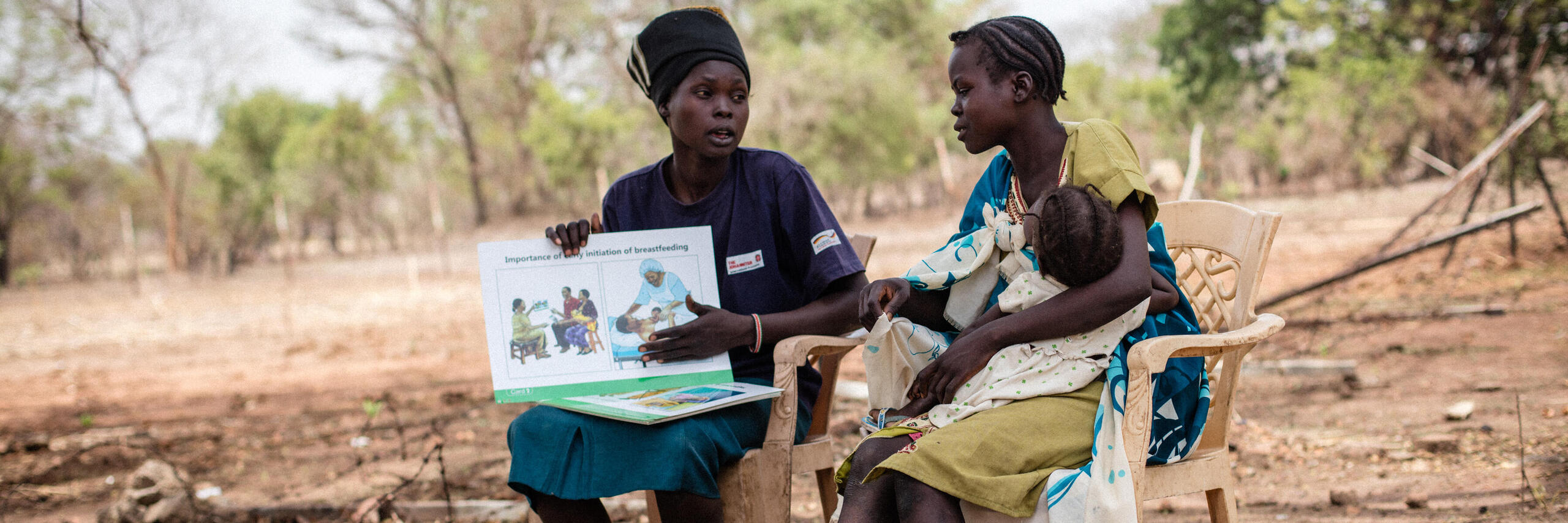
We support people through health projects. In Wau, for example, we are building maternity wards in primary healthcare facilities and training village health workers to provide healthcare for children under five. Through our nutrition projects, we monitor the nutritional status of young children and provide additional food in cases of malnutrition. In Torit, we provide remote villages with access to healthcare through mobile clinics. We conduct awareness campaigns in villages and communities on topics such as gender-based violence (GBV), early marriage, and protection against sexual exploitation, abuse, and harassment.
Another key focus is WASH projects. We drill and rehabilitate wells to provide clean drinking water. We also build latrines at schools, clinics and marketplaces. In terms of income generation and food security, we provide training to groups of farmers in climate-resilient farming methods. Women's groups learn bread baking, sewing, knitting and how to build fuel-efficient stoves, enabling them to generate their own income.